Advanced Options
For folks who want to roll their own hardware, push more power, or experiment with mesh-monitoring software. Most people don't need this. A WisMesh Tag or T-Echo and you're set for the Forest.
High-Power Nodes
B&Q Station G2
The most powerful consumer Meshtastic radio available. Most handhelds put out ~0.25–0.5 watts. The Station G2 puts out 1 watt, so it reaches dramatically further. Fantastic base station / static node.
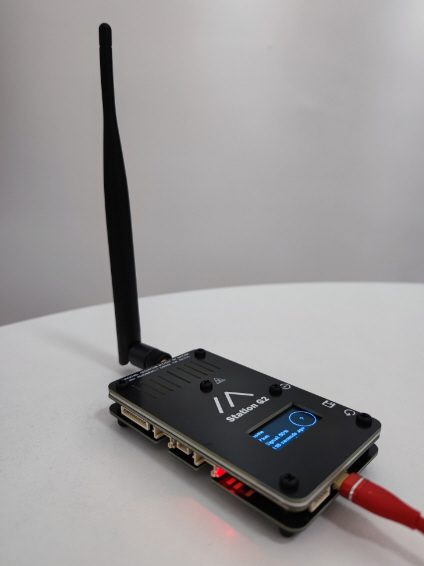
| Pros | 1W transmit power (vs ~0.5W for most) · Modular — can add GPS, etc. · Wifi (accessible over your local network) · Excellent for a base station |
| Cons | Sells out fast · 2–3 week lead time · Power-hungry, no built-in battery · Known to "talk loud, be deaf" (great TX, weaker RX) · Expensive |
| What you need | An antenna (upgrade from stock) |
| Where to buy | B&Q Consulting (official) |
| Guide | Uniteng wiki |
Heltec V4
Newer and more available than the Station G2. Same 1W output. Open-source friendly.
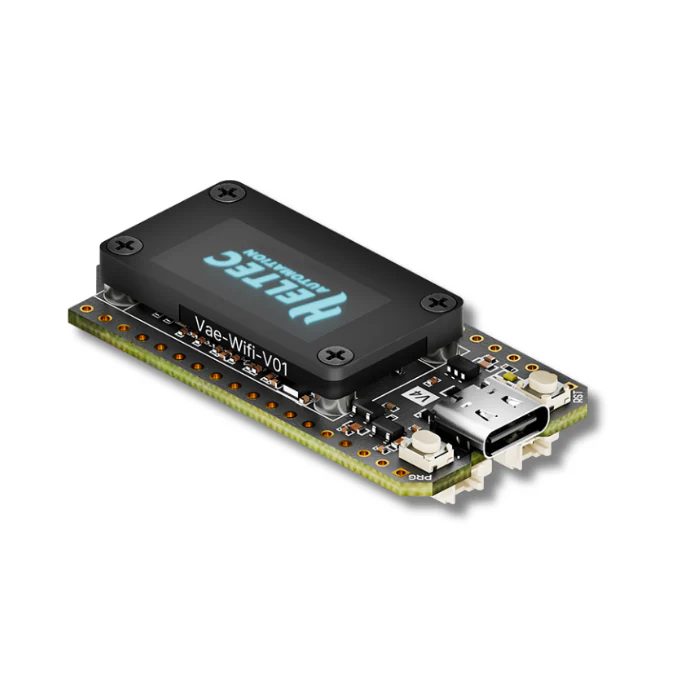
| Pros | Newer, easier to find than Station G2 · 1W transmit power · Modular — add GPS, accessories · Wifi · Great base station · Some folks turn these into solar nodes (with effort) |
| Cons | Newer = some early bugs still · Power-hungry, no built-in battery (you have to add one) |
| What you need | Antenna (upgrade from stock) · A case · Battery (if portable) |
| Where to buy | Rokland · Etsy (cases & prebuilt) |
DIY Build Kits
RAK Wireless WisBlock Starter Kit
Most flexible DIY option. Pick your case, battery, antenna, modules. Super power-efficient — great base for solar nodes. And it's the cheapest path to a 1W node if you're willing to swap the radio module for a 1W booster (more on that below).
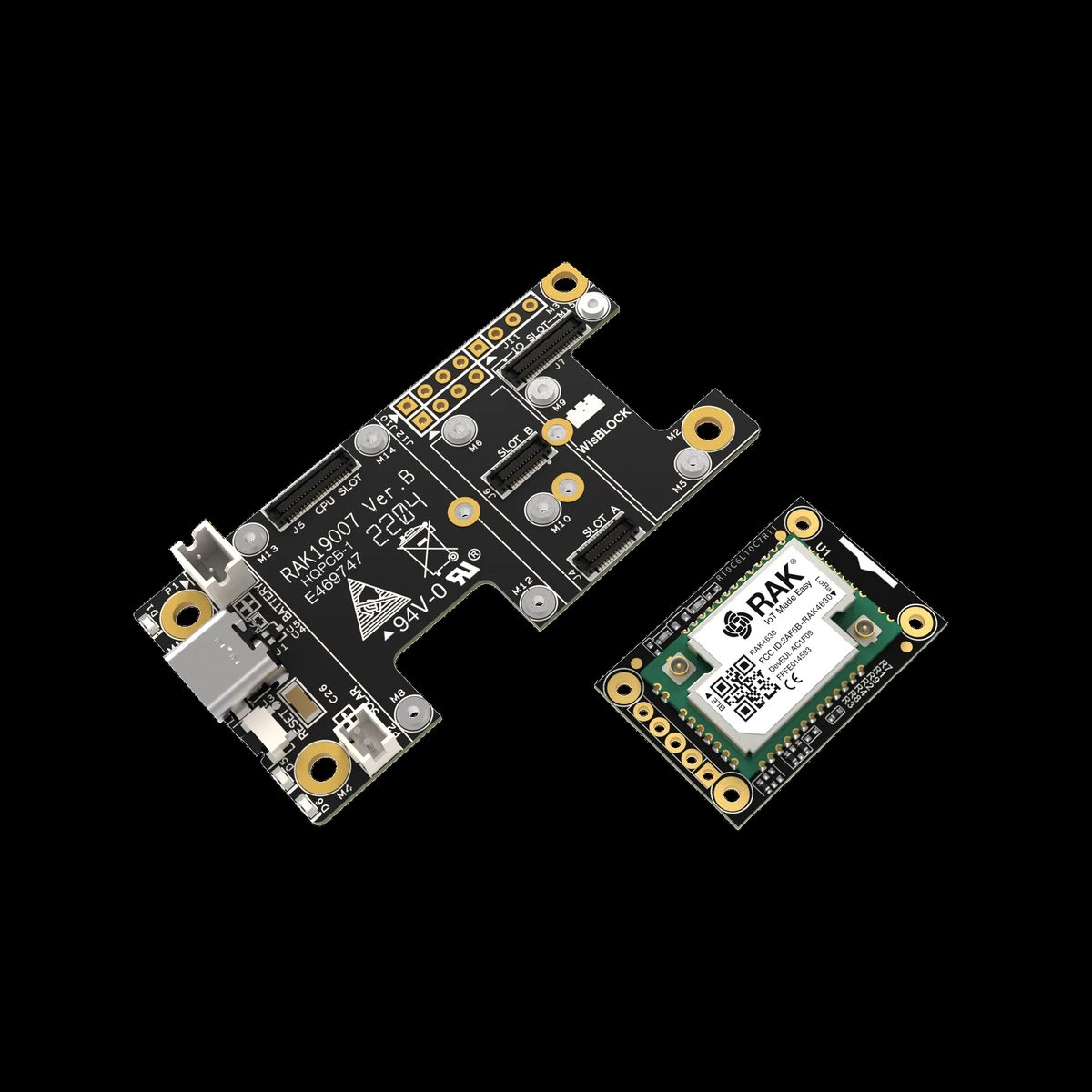
| Pros | Cheaper than a pre-built · Massively customizable · Super power-efficient (great for solar) · Can be built as a 1W node with a booster module |
| Cons | Requires time, patience, and some technical chops · Need to source case, battery, antenna separately |
| Buy the kit | RAK Wireless (international) · Rokland (US distributor) |
| Case options | Etsy — Sentinel case · Etsy — mini box · 3D printable |
| Antenna guide | Meshtastic antenna docs |
| Build guide | RAK WisBlock devices on Meshtastic docs |
Why add a 1W booster?
The default LoRa radio on most handhelds and starter kits transmits around 22 dBm (~160 mW) — and in the US/AU 915 MHz band, regulation caps a stock node well under a watt. A 1W booster module pushes that to 30 dBm = 1000 mW, roughly 6× the radiated power of a stock node.
Because free-space range scales with the square root of power, ~6× the power gets you roughly 2–2.5× usable range in the real world (more in clean line-of-sight, less through bodies and trees).
At the Forest specifically, this is the difference between in-mesh and off-mesh for venue-fringe campers — camp-to-stage hops can stretch 0.5–1.5 miles with bodies, RVs, and tree cover in the way. A 1W node + a decent whip + a few feet of elevation (totem, pole, roof of a van) is the high-leverage stack.
The KDHD Stuff scratch-build walkthrough is a great reference if you want to see a WisBlock + booster + solar repeater built end-to-end: Scratch Build Repeater for Meshtastic and MeshCore (~50 min, parts list in the description).
If you don't want to assemble anything, skip to the WisMesh Station below — same 1W output, plug-and-play.
RAK WisMesh Station (plug-and-play 1W)
The plug-and-play 1W camp node — same power class as the WisBlock + booster build above, but assembled, configured, and ready to run out of the box. If "spend a Sunday soldering" sounds like a chore, this is the easy button.
| Pros | True 1W (30 dBm) on the HP variant · Pre-installed meshtasticd, MQTT broker, Node-RED, Grafana · Full metal enclosure · Runs on a Raspberry Pi 4 — wifi + ethernet + USB built-in · Includes LoRa antenna, GPS antenna, power adapter, 16GB SD card |
| Cons | More expensive than rolling your own (~$170+) · AC powered (no built-in battery — wire it to a USB battery bank or AC at camp) · Heavier than a handheld (~630g) |
| Variants | WisMesh Station (RAK8622) — 22 dBm / ~160 mW, ~$169.99 · WisMesh Station HP (RAK8623) — 30 dBm / 1W, ~$175.99 (get this one if you want the range boost) |
| What's in the box | WisMesh Station unit · LoRa antenna · GPS antenna · Power adapter · 16GB SD card |
| Where to buy | RAK Wireless store |
Why this is the easiest path to 1W coverage: every other 1W option on this page either ships as a board you have to case + power + antenna yourself (Station G2, Heltec V4), or requires you to swap radio modules and source parts (WisBlock + booster). The WisMesh Station HP arrives assembled, in a metal enclosure, with antennas in the box and the software pre-flashed. Plug in USB-C, screw on the antenna, you're a 1W node.
Software for Power Users
MeshMonitor
A self-hosted web tool that auto-acknowledges messages and runs auto-traceroutes. Great for nerds running infrastructure nodes — typically deployed on a Raspberry Pi at camp. Helps the mesh self-heal by mapping connectivity automatically.
If you're comfortable with self-hosted tools and a Pi, check out MeshMonitor.
MeshSense
Don't want to mess with a Pi? MeshSense runs on your laptop (Mac/PC/Linux) and does auto-traceroutes that help strengthen the mesh. Easier on-ramp than MeshMonitor.
Antennas (Deep Dive)
Recommended antennas:
- Muzi 17cm Whip — handheld upgrade, SMA male, ~$12
- ALFA 915 MHz 5dBi N-Type 7" Outdoor — base station omni
- Rokland 5.8 dBi N-Male Omni Outdoor (large) — permanent outdoor mounts
Tips:
- Watch out for fakes on Amazon — antennas are the most counterfeited Meshtastic accessory. Buy from the trusted sources above.
- For base stations, use quality SMA or N-type cable. Keep the cable short — every foot adds signal loss.
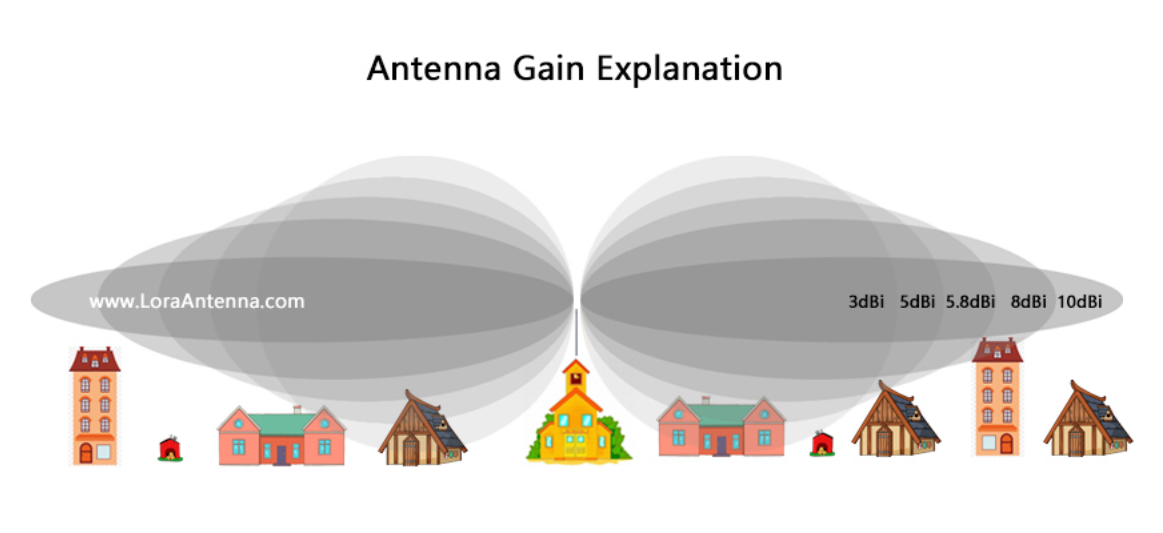
- More dB ≠ more coverage. A directional high-dB antenna in the wrong orientation has less useful coverage than a modest omni.
Example Setups
Folks in the community have shared their builds. Drop yours in the EF Discord (not in the Discord? join at discord.gg/electricforest first) and we'll feature it here.
Cube Totem Mount
A T-Echo mounted to a 3D-printed bracket with a tripod-cheese-board adapter, riding on top of a Hyper Cube totem. Visible from across camp and high enough to push range significantly.
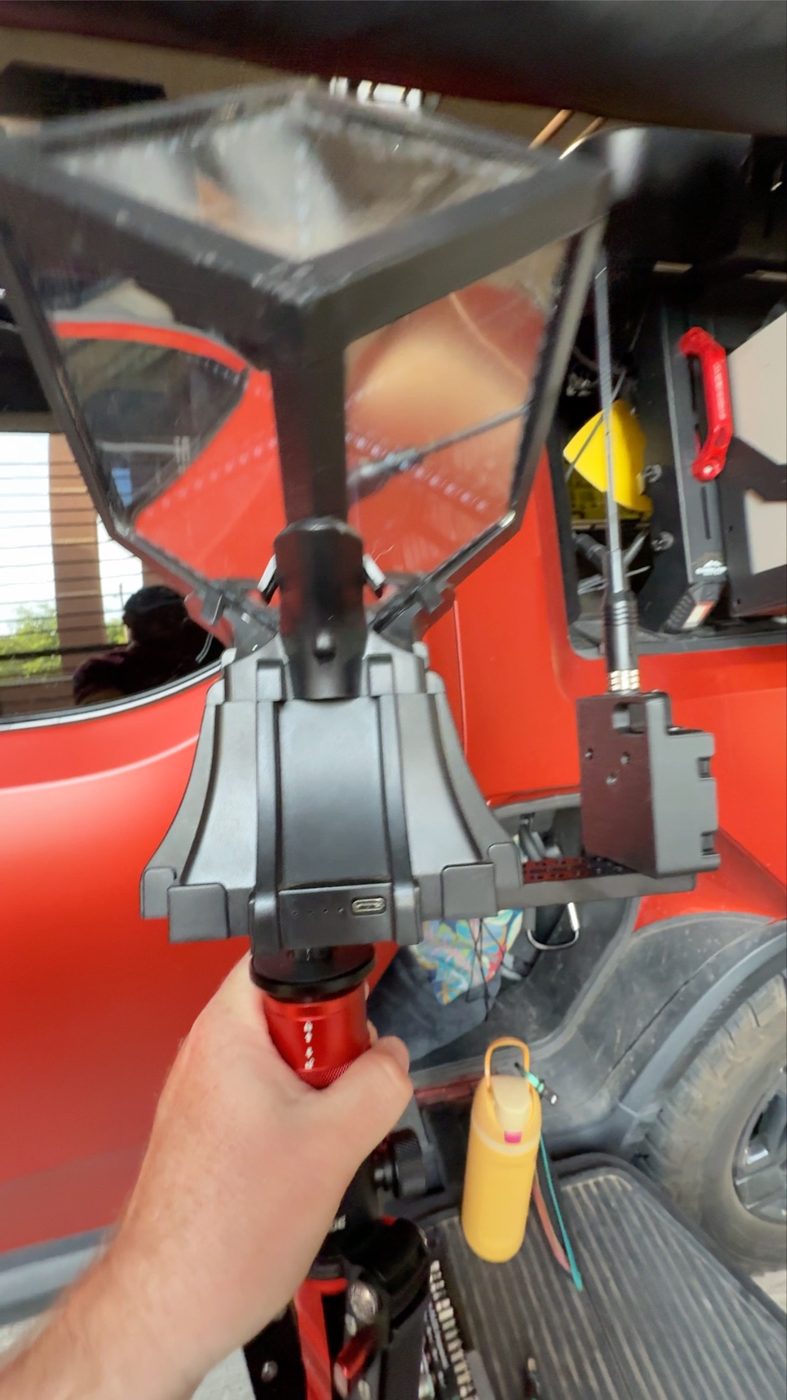
G2 Mobile Setup
A Station G2 powered via USB-C, with an SMA cable running out to a roof-mounted antenna on a vehicle. Functions as a mobile base station that follows you to and from camp.
Test Setup (T-Echo + 1W Base)
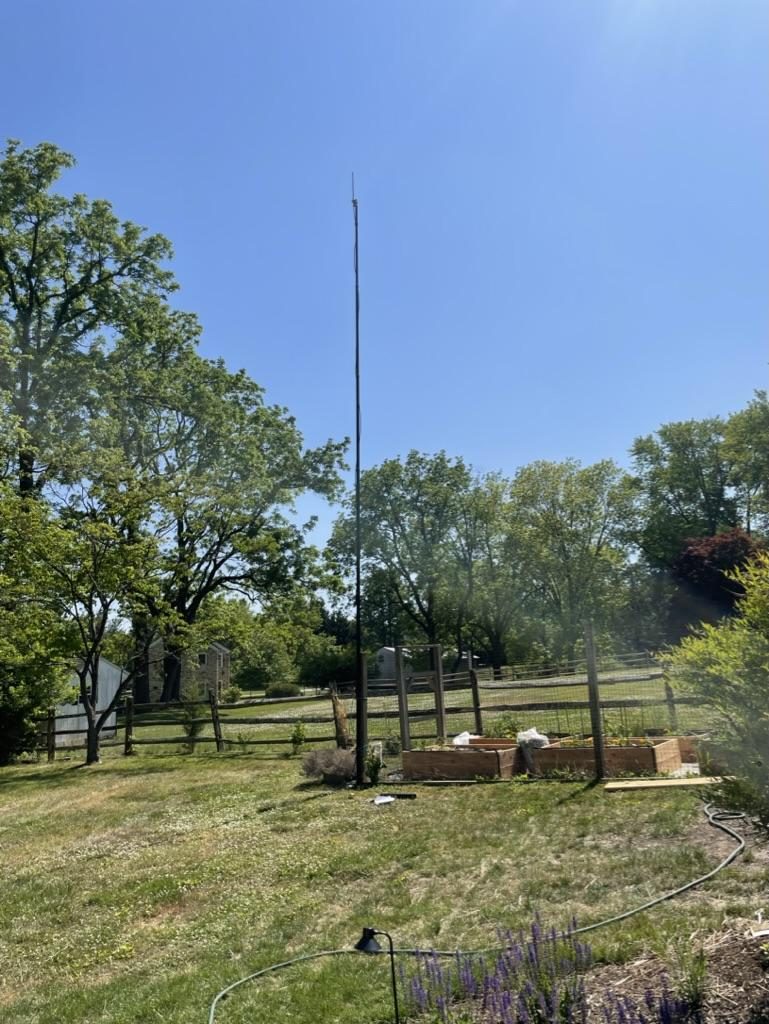
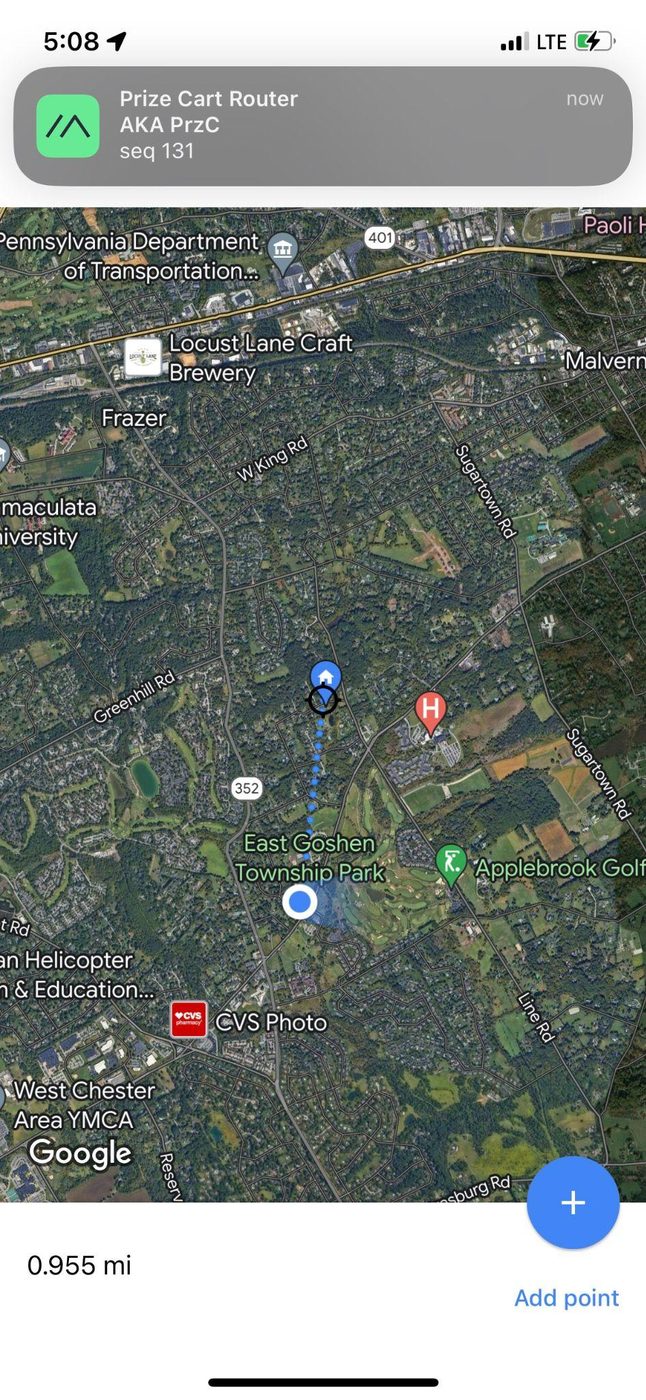
1× T-Echo handheld + 1× 1W base station (Station G2, Heltec V4, or a WisBlock with booster) = easily 1+ mile range hip-height. Dead spots at sharp elevation drops or through dense tree cover. Two-node minimum to start seeing real benefit.
Need Help?
Not in the Discord? Join at discord.gg/electricforest first.